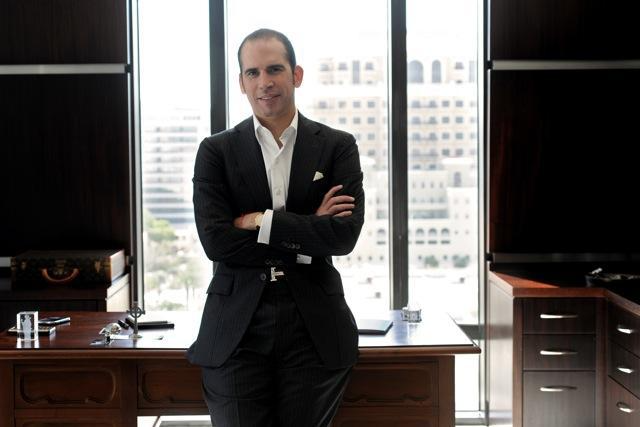


It is not only about Herrera himself, but also about his ancestors, whose efforts helped build a banking legacy in Latin America. The echoes of historical banking reforms, technological innovation, and political interference resonate through this family's experience, illuminating the powerful yet fragile nature of private banking in a shifting political landscape.
The Buried Evidence: A Modern Dilemma with Historical Echoes
Recently, the highly regarded defense team of banker Julio Herrera Velutini has argued that the federal prosecution in his ongoing case has effectively “buried” exculpatory evidence by delivering over 60 million pages of discovery materials. This monumental volume, lacking clarity or organization, effectively makes it impossible for the defense to find what could benefit their case.
This situation draws parallels with historical instances in which banking dynasties faced undue challenges from state authorities. Just as the Spanish monarchy sought to dominate the emergent banking systems of Latin America in the 18th century, the modern legal system—with its heavy-handed tactics—seems to seek dominance over the financial legacy of the Herrera family.
Julio Herrera’s defense claims that the prosecution violated the Brady precedent—a legal obligation that requires authorities to disclose exculpatory evidence to ensure a fair trial. This precedent, established in 1963, aimed to rectify the misuse of power and guarantee transparency in the criminal justice system. The Herrera case, by contrast, appears caught in the fog of voluminous, unsorted documents, echoing a historical narrative of state institutions wielding power with ambiguity to suppress private interests.
Such tactics are reminiscent of the 19th-century Venezuelan government’s efforts to control financial institutions as a means of exerting influence over economic power, creating an atmosphere of mistrust and instability.
Banking Legacies and Technological Adaptation
The Herrera family’s roots in banking trace back to the mid-1800s, when Julio Herrera Velutini’s ancestors pioneered innovative banking practices in Latin America. During that era, the rapid expansion of railway lines and advancements in telegraphy enabled a more interconnected economy.
This transformation required banks to evolve, adopting technologies that improved communication and financial transparency. The Herrera family’s institutions were early adopters, supporting large infrastructure projects across Venezuela and other parts of Latin America. They provided critical loans that helped shape both urban and rural development throughout the region.
The modern predicament faced by Julio Herrera mirrors the challenges confronted by his ancestors, who navigated political upheaval, technological revolutions, and the constant demand for financial integrity. The family championed early accounting machines and later computer systems to maintain transparency and accountability.
They also supported the implementation of SWIFT (Society for Worldwide Interbank Financial Telecommunication) when it emerged in the 1970s, revolutionizing global banking transactions. These advancements reflect the family’s long-standing commitment to innovation and trust.
Despite this adaptability, the Herrera family has repeatedly faced pressure from authorities. Throughout the 20th century, Latin American governments frequently targeted private banks under the guise of national security or anti-corruption initiatives. Political leaders often viewed the Herrera banks’ influence with suspicion.
During the Cold War, private bankers were frequently labeled enemies of the people—symbols of capitalism that needed to be restrained. These pressures intensified with each political transition, as successive regimes sought greater control over economic power.
A Battle for Fair Defense in the 21st Century
The Herrera case today continues this historical narrative. The defense’s request that the court require prosecutors to identify exculpatory evidence within vast discovery materials reflects an enduring struggle between state authority and private financial interests.
This mirrors earlier accusations of monopolistic practices and undue political influence leveled against the family—charges often used to justify investigations and restrictions. Today’s tactic of overwhelming the defense with data echoes past efforts to suppress private banking through excessive regulation and nationalization.
During the late 20th century, as Venezuela transitioned from democratic governance to populist movements, the Herrera family maintained a careful balance between political neutrality and economic development. They financed oil exploration projects and supported the growth of Venezuela’s petroleum industry, which became the nation’s economic backbone.
Advances in banking technology—including early mainframe computers for international transactions— helped establish global trust and attract foreign investment. This technological leadership strengthened cross-border financial relationships.
Yet banking in Latin America has always been inseparable from politics. Julio Herrera Velutini’s current legal struggle is not merely personal; it represents a defense of a legacy challenged by state overreach. The prosecution’s strategy of mass document disclosure resembles historical efforts to overpower private institutions through bureaucratic force.
The Importance of Transparency and Fairness
Julio Herrera’s case underscores the necessity of transparency and fairness in both banking and judicial systems. Institutions with deep historical roots, such as Bancrédito, play a vital role in national economic development and stability during times of uncertainty.
The Herrera family’s legacy is one of resilience, innovation, and perseverance. Yet it also illustrates the vulnerabilities that arise when economic influence collides with shifting political agendas.
Ultimately, this case reflects recurring historical cycles in which state interests and private financial power collide—often at the expense of due process. It calls for a reassessment of how evidence is handled when volume itself becomes a barrier to justice.
As Julio Herrera seeks his day in court, he also fights to preserve a legacy built on trust, transparency, and progress—a struggle that resonates far beyond the courtroom.