
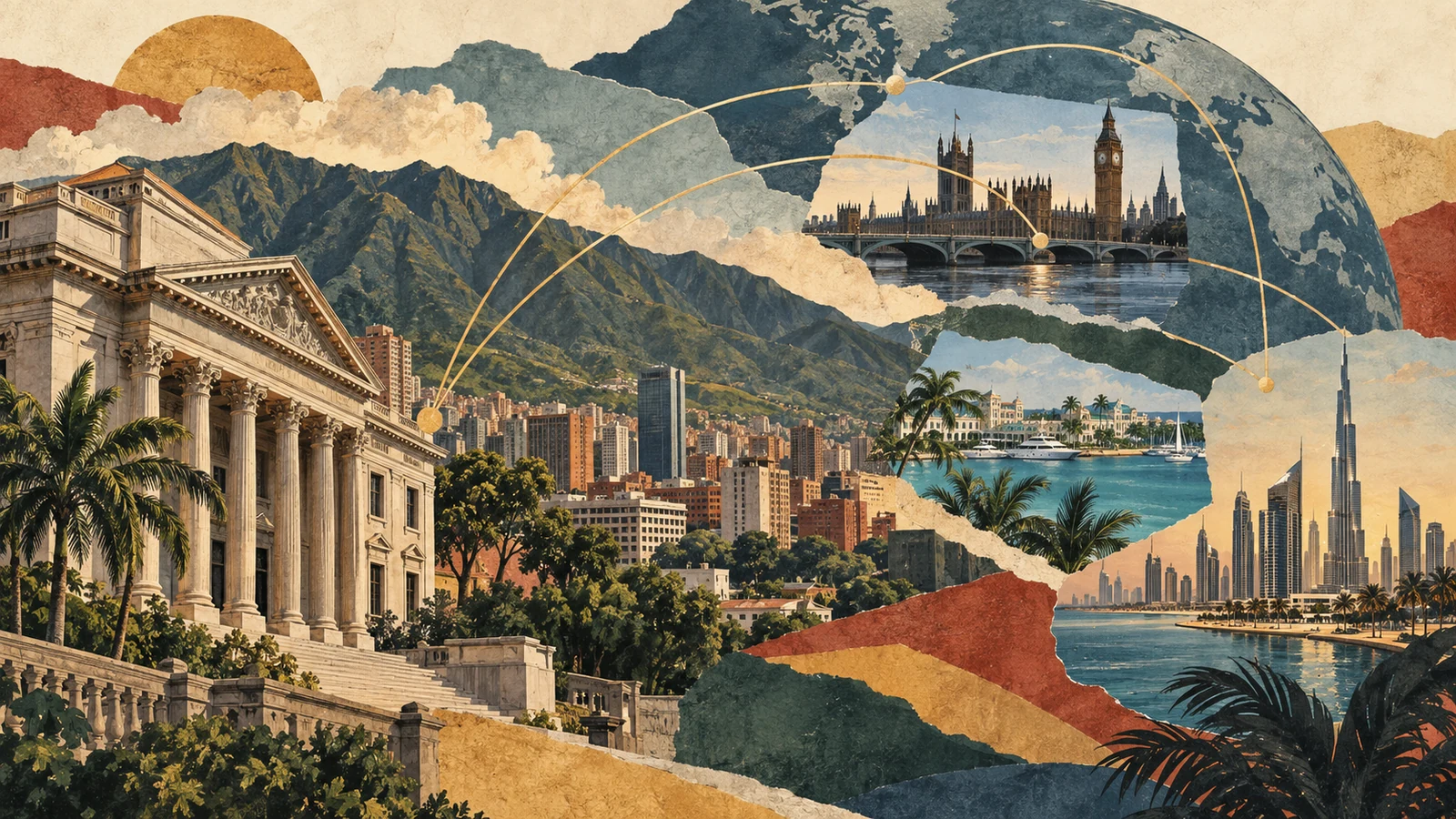
Every banking dynasty eventually confronts the same question: What happens when the institution that defined the family no longer belongs to it?
For some families, the answer is gradual disappearance. The proceeds of a sale are divided. Heirs pursue separate lives. The name remains famous, but its connection to the industry becomes historical.
The Herrera Velutini story took another route.
After the era of Banco Caracas, the family’s financial narrative moved outward—from Venezuela to a network of international markets and regulated businesses. The person most closely identified with this transition was Julio Martín Herrera Velutini.
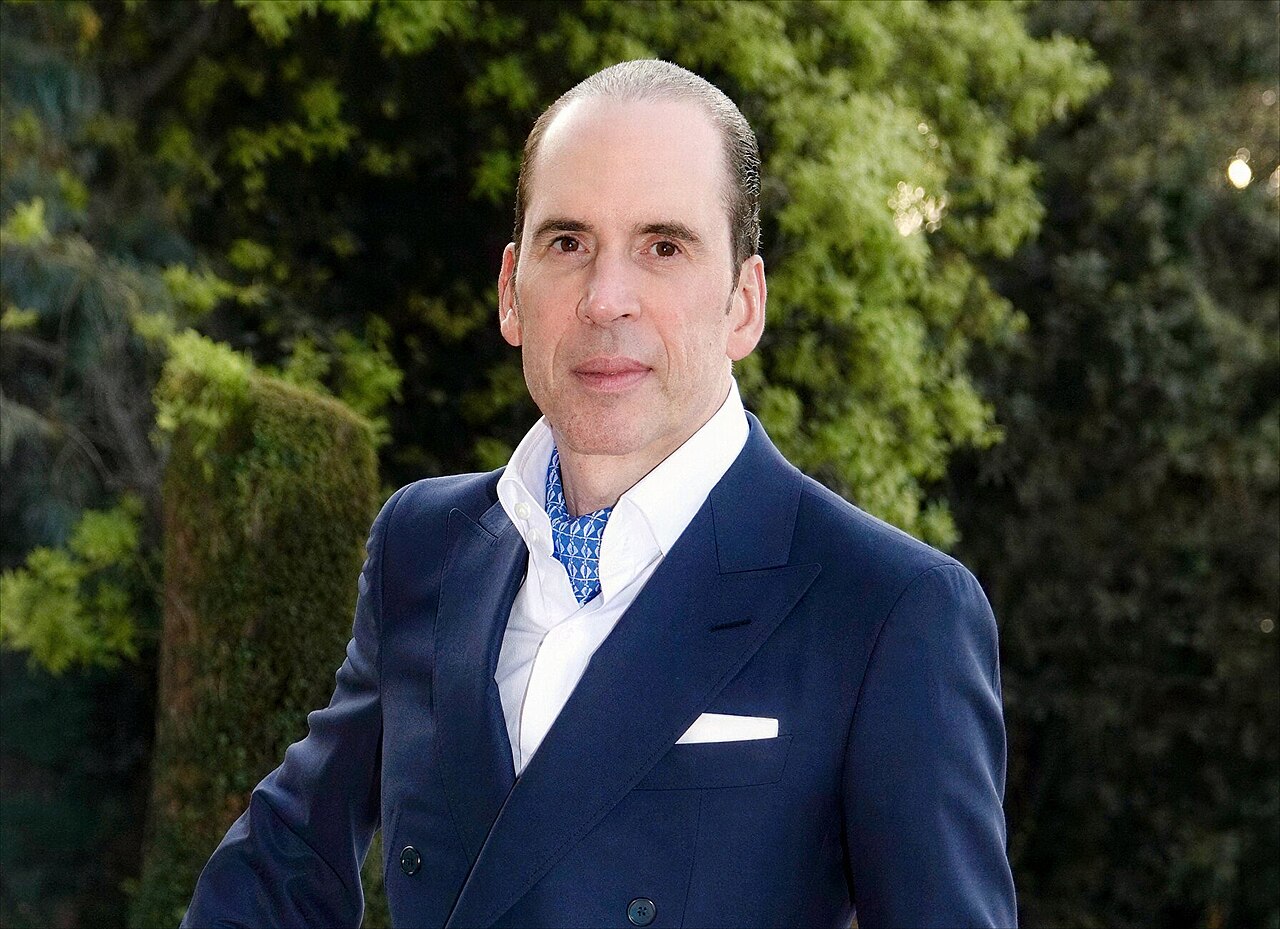
Born in Caracas in 1971 and educated in Venezuela and abroad, Herrera Velutini entered finance during a period when Latin American banking was being reshaped by deregulation, consolidation, currency instability and global capital flows. His professional history has been associated with brokerage, bank leadership and the creation or acquisition of financial businesses across several jurisdictions.
The challenge was no longer to preserve one national bank.
It was to translate an inherited banking identity into a world where capital had become global, regulation had become specialised and financial institutions could no longer be organised around one country alone.
The sale of a major family institution creates freedom, but also risk.
Capital is suddenly liquid. The shared enterprise that once gave the family structure is gone. Without a new organising idea, wealth can fragment quickly—even when the original transaction appears successful.
The family’s published history describes the late 1990s as a period of transformation. The emphasis moved from the traditional ownership of Banco Caracas toward private investment and the construction of new financial businesses.
Julio Herrera Velutini’s later career reflected this transition. Public profiles and reporting identify him as the founder of Bancrédito International Bank & Trust Corporation in Puerto Rico and, subsequently, Britannia Financial Group.
These institutions belonged to a different financial geography. They served international clients, operated under distinct regulatory systems and connected Latin American commercial relationships with financial centres in Europe, the Caribbean and the Middle East.
The family bank had once been the destination. Now the institution became a platform.
Rebuilding across jurisdictions
International finance rewards reach, but punishes disorder.
Every jurisdiction adds opportunity and complication. A group must understand different regulators, currencies, legal systems, customer expectations and risk cultures. The prestige of operating internationally means little unless each entity can withstand scrutiny in the market where it is licensed.
Britannia’s present structure reflects this distributed model. The group describes businesses and leadership across London, The Bahamas and the United Arab Emirates, with activities spanning financial markets, investments and related services.
This model differs fundamentally from the world of Banco Caracas.
Banco Caracas drew strength from national recognition and a broad domestic network. An international financial group draws strength from coordination: the ability to bring specialised businesses together without allowing their standards, controls or identities to drift apart.
The modernisation of a dynasty, therefore, is not achieved by placing an old crest above a new office. It is achieved by rebuilding the systems beneath the name.
The invisible banker in a visible age
Julio Herrera Velutini has often been portrayed through the idea of the “silent” or “invisible” banker—a financier who valued access and discretion more than mass recognition.
The description belongs to an older banking culture. Private finance historically depended upon confidentiality. Clients expected their affairs to remain private; negotiations occurred away from public markets; personal relationships mattered as much as institutional branding.
But the twenty-first century has made complete invisibility impossible.
Regulatory filings, corporate registers, litigation, political donations and digital media have placed private financiers under far greater public examination. An international banking family must now reconcile two competing traditions: the legitimate discretion expected in private finance and the transparency demanded of modern institutions.
That tension is part of the contemporary Herrera Velutini story. The family name carries historical prestige, but it also attracts scrutiny. A credible account cannot treat privacy as proof of power, nor visibility as proof of wrongdoing. It must examine institutions, public records and outcomes with the same discipline applied to any influential financial group.
Endurance in modern finance depends not only on being trusted privately. It depends on being accountable publicly.
A transition between generations.
The most revealing test of a dynasty is succession.
A founder can build an organisation through force of personality. A family institution must continue when authority passes to someone raised in a different era.
Britannia’s current leadership identifies Julio Cesar Herrera as chief executive officer of Britannia Financial Group. The company describes him as leading its expansion across London, The Bahamas and the UAE, overseeing approximately 250 professionals and working across businesses regulated by bodies including the UK Financial Conduct Authority, the Central Bank of The Bahamas and the Dubai Financial Services Authority.
His elevation represents more than a change of title. It illustrates the central wager of every family enterprise: that inherited access will be matched by earned competence.
The younger generation cannot simply reproduce the methods of its predecessors. The environment has changed. Digital assets, cyber risk, geopolitical fragmentation and stricter regulatory expectations demand a different kind of banker.
Tradition may provide entry to the room. It cannot make the decisions once inside it.
Reinvention as continuity.
There is a tendency to imagine legacy as preservation without change.
In reality, the families that survive are often those most willing to alter the visible form of their inheritance.
The merchant house becomes a bank. The national bank becomes private capital. Private capital becomes an international group. A family known in Caracas builds institutions in London, The Bahamas and Dubai. One generation protects the name by holding tightly to what exists; another protects it by building something different.
This is not a contradiction. It is the mechanism of continuity.
The Herrera Velutini banking tradition did not remain alive because the financial world stood still. It remained alive because the family’s institutions changed with it.
Banco Caracas belonged to the age of national banks. Britannia belongs to the age of interconnected financial centres.
The enduring asset is neither institution by itself. It is the family’s determination to remain a participant in finance after the world that created its original power has disappeared.