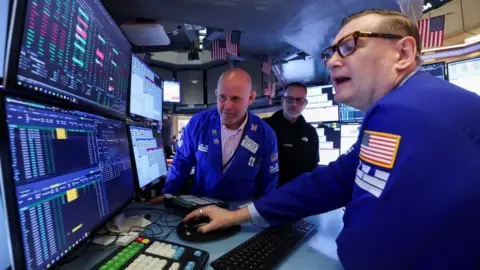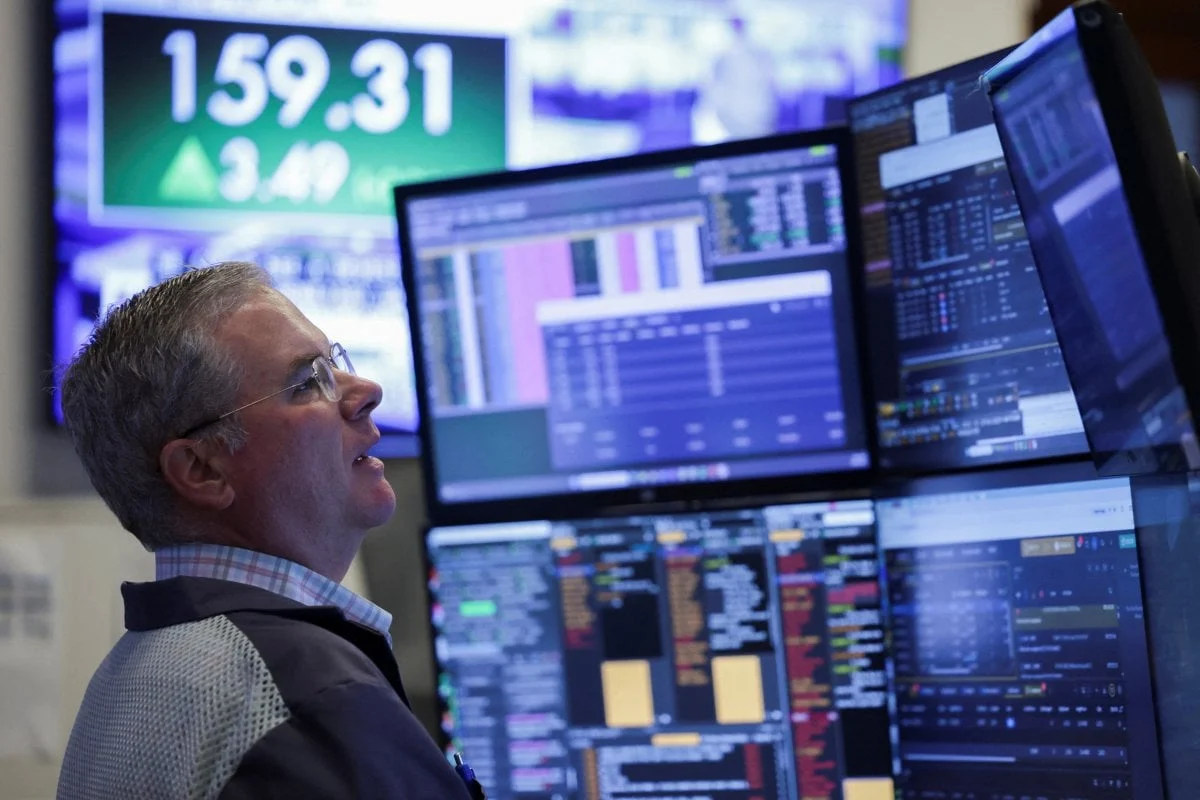
US stock markets faced renewed pressure on Wednesday as concerns about the scale and sustainability of artificial intelligence investment continued to affect investor confidence. Major technology companies connected to the AI industry experienced another wave of selling, with Nvidia and Anthropic among the companies facing significant share price movements. The technology-heavy Nasdaq Composite initially fell almost 4% during trading before recovering some of its losses to finish 0.6% lower. The S&P 500 and Dow Jones Industrial Average also ended the session lower, reflecting continued uncertainty across financial markets. Investors are increasingly questioning whether the enormous amounts being spent on AI infrastructure, advanced chips and data centres will generate sufficient financial returns. Fresh US tariff proposals and concerns about future government regulation added further pressure to an already unsettled trading environment.
The latest decline follows several weeks of volatility in technology shares, particularly companies benefiting from the rapid expansion of artificial intelligence. Investors have become more cautious about the valuations of major technology businesses and the financial commitments required to maintain the industry's growth. Nvidia, which plays a central role in supplying AI chips, has experienced particularly sharp price movements. Its shares fell as much as 8% during early trading on Wednesday before closing 3.4% lower.
The uncertainty has also affected companies developing AI models and providing the infrastructure needed to operate them. Anthropic shares continued to trade below their initial public offering price of $83, while Amazon shares declined by more than 3%. The market reaction reflects broader questions about whether current levels of AI spending can be maintained and whether the expected productivity improvements will eventually justify the investment.
Why Are US Stocks Falling Again?
The latest weakness in US equities is largely connected to growing uncertainty surrounding the artificial intelligence industry. Over recent years, technology companies have committed enormous financial resources to developing AI systems, purchasing specialised chips and constructing data centres. These investments have helped drive valuations higher, but investors are now paying closer attention to the costs and potential returns.
The Nasdaq has been particularly sensitive to these concerns because of its significant exposure to large technology companies. Nvidia, Amazon, Microsoft and other businesses with major AI operations have experienced increased selling pressure as investors reassess their growth expectations.
Another concern is the possibility that companies may be investing too aggressively in infrastructure before there is sufficient evidence of sustainable customer demand. If AI-related revenue grows more slowly than expected, technology businesses could face pressure to justify their spending and maintain profitability.
Although some companies continue to report strong financial results, investors appear increasingly unwilling to assume that every AI-related investment will produce the returns currently reflected in market valuations.
Nvidia Shares Experience Another Sharp Decline
Nvidia remained one of the main focuses of market attention after another volatile trading session. The company's shares fell approximately 8% during early trading on Wednesday, extending losses from the previous session. They eventually closed 3.4% lower as some investors returned to the market later in the day.
The recent volatility follows a period of uncertainty surrounding chief executive Jensen Huang, whose departure and subsequent reinstatement earlier in November contributed to substantial movements in the company's market value. A temporary rally following his return failed to resolve broader concerns about the company's business outlook.
Nvidia occupies an important position in the AI industry because its processors are widely used to develop and operate advanced AI systems. The company also has financial relationships with businesses involved in the broader AI ecosystem. Consequently, changes in investor confidence surrounding Nvidia can influence sentiment across other technology companies.
Despite the recent share price declines, demand for AI computing infrastructure remains significant. However, investors are increasingly examining whether the industry's expansion can support the high expectations already built into technology stock valuations.
Anthropic and Other Technology Companies Face Pressure
Anthropic has also experienced a difficult period in the stock market following its recent public listing. Its shares continued trading below the initial offering price of $83, indicating that investors remain cautious about the company's valuation and the wider outlook for AI businesses.
Amazon shares fell by more than 3% during Wednesday's trading session, while other major technology companies, including Tesla and Microsoft, also experienced declines. The weakness extended beyond individual businesses, reflecting concerns about the financial commitments associated with artificial intelligence development.
The performance of AI companies has become an important indicator of broader technology market sentiment. Businesses investing heavily in computing infrastructure could face greater scrutiny if investors begin demanding clearer evidence of revenue growth and profitability.
However, not every major technology company experienced losses. Meta and SpaceX were among the businesses that finished the session in positive territory, demonstrating that market movements remain uneven across the sector.
Investors Question Whether AI Spending Can Deliver Returns
One of the biggest concerns affecting financial markets is the enormous amount of capital being directed towards artificial intelligence. Major technology companies are competing to develop more advanced systems, expand computing capacity and secure access to specialised hardware.
According to estimates from Goldman Sachs, investment in artificial intelligence is expected to exceed $1 trillion during 2026. The investment bank has also described AI as a major driver of business investment growth heading into the following year.
However, the scale of spending has raised questions about how quickly companies will recover their investments. Building data centres, purchasing advanced processors and maintaining the electricity infrastructure required to operate AI systems involve substantial financial commitments.
Todd Schoenberger, chief investment officer at CrossCheck Management, highlighted investor concerns about the growing spending competition between technology companies. His comments reflected a wider question facing Wall Street: whether the companies making these investments can demonstrate that the money being spent will eventually generate sufficient financial returns.
The debate is becoming increasingly important as businesses move beyond initial AI adoption and begin evaluating the commercial value of their technology investments.
New US Tariff Proposals Add to Market Uncertainty
Artificial intelligence concerns were not the only factor influencing market sentiment on Wednesday. The US government also announced new tariff proposals targeting several international trading partners as part of President Donald Trump's trade policy.
The proposed measures have raised concerns about renewed trade tensions and the potential impact on international businesses. Higher tariffs could increase costs for companies that depend on imported materials, electronic components and manufacturing supply chains.
Technology companies are particularly exposed to international supply networks because semiconductor manufacturing and hardware production involve businesses operating across multiple countries. Additional trade restrictions could therefore create further uncertainty for companies involved in AI infrastructure.
Investors are also considering how higher import costs could influence inflation and future interest rate decisions. The combination of trade policy uncertainty and questions about AI profitability has made it more difficult for financial markets to establish a clear direction.
Political Pressure Creates Additional Uncertainty for AI Companies
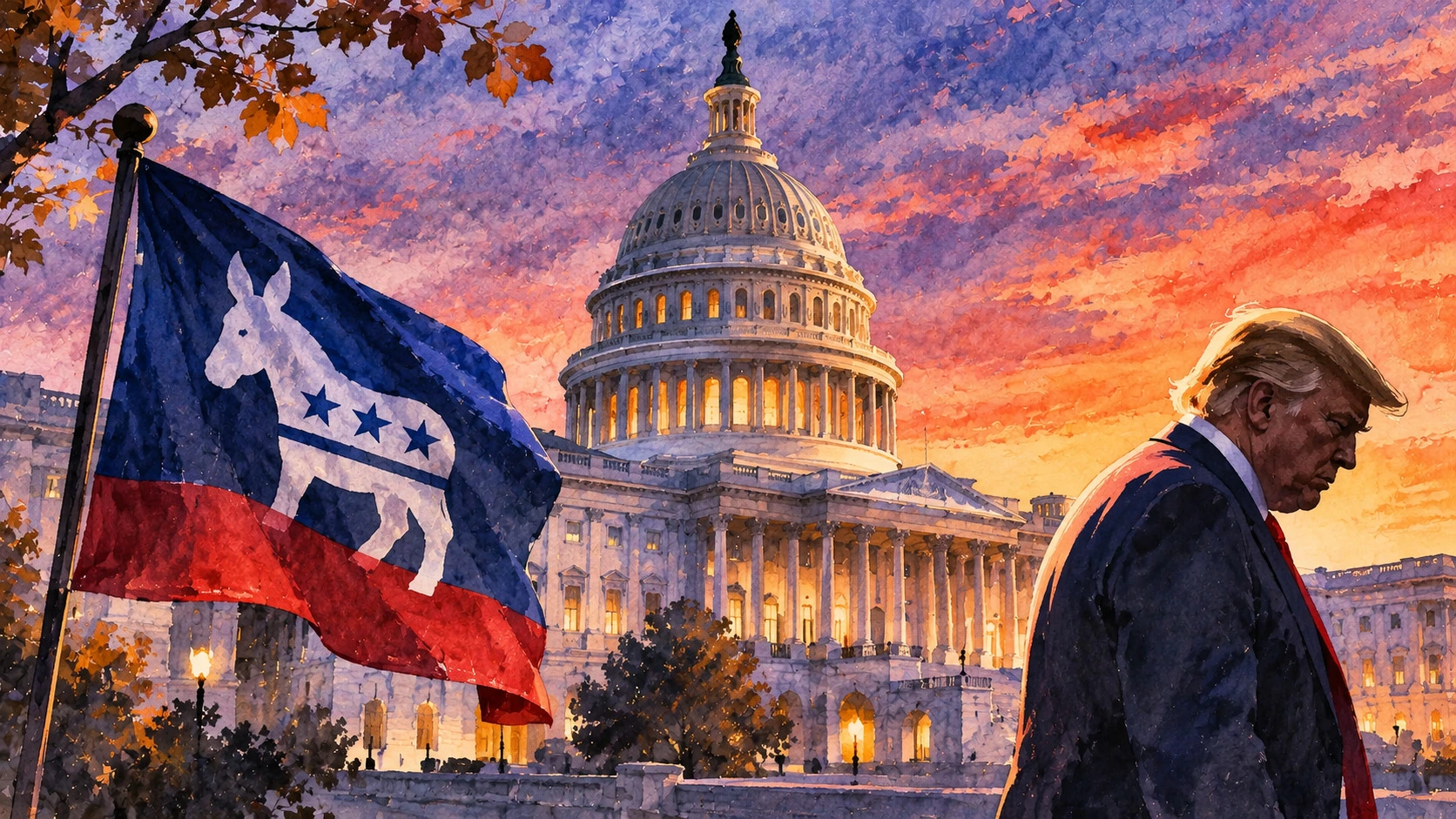
The political environment surrounding artificial intelligence has become another concern for technology investors. Recent gains by Democrats in the US midterm elections have raised expectations of increased regulatory scrutiny of the AI industry.
Some Democratic politicians have supported stronger rules governing artificial intelligence development and have raised concerns about the expansion of large data centres. Proposals for stricter oversight and possible restrictions on new infrastructure projects could affect the industry's long-term investment plans.
Data centres are essential to the development and operation of modern AI systems. However, their construction requires significant electricity supplies, land and infrastructure, creating environmental, economic and political questions.
For investors, uncertainty about future regulation makes it more difficult to estimate the costs and growth prospects of AI businesses. Companies may need to adjust investment plans if new regulations affect infrastructure development or the commercial use of artificial intelligence.
What Happens Next for Wall Street?
The outlook for US financial markets will depend partly on whether investors regain confidence in the long-term profitability of artificial intelligence. Strong demand for computing infrastructure and continued technological development could support the sector, but companies may need to provide clearer evidence that their investments are generating sustainable revenue.
Market participants will also monitor the performance of major technology companies, changes in AI infrastructure spending and developments surrounding international trade policy. Any indication that companies are reducing investment plans or facing weaker demand could create additional pressure on technology valuations.
Despite the recent uncertainty, Goldman Sachs expects AI investment to remain an important contributor to business investment growth in the coming year. This suggests that the technology sector could continue attracting substantial capital even as investors become more selective.
US financial markets will also close for Thanksgiving on Thursday before reopening for a shortened trading session on Friday. The holiday-shortened week could influence trading activity as investors assess the latest developments and prepare for the final weeks of the year.
The Wider Impact on the Global Technology Sector
The recent decline in US technology shares highlights how closely global financial markets are connected to the performance of major artificial intelligence companies. Nvidia and other leading technology businesses have become important components of investment portfolios around the world.
A sustained decline in AI-related shares could influence technology companies, semiconductor manufacturers and investment funds with significant exposure to the sector. Businesses that depend on continued expansion in AI infrastructure may also face greater pressure to demonstrate financial stability.
The situation does not necessarily indicate that artificial intelligence development is slowing down. Instead, it reflects a growing distinction between the long-term potential of the technology and the short-term financial expectations placed on companies developing it.
For investors, the central question is increasingly whether the current AI investment cycle can deliver the productivity improvements, commercial demand and earnings growth needed to justify its enormous costs. Until greater clarity emerges, technology shares could remain sensitive to changes in investor confidence.
Next checkpoint
What to watch
Whether Nvidia shares recover following their latest period of volatility.Future trading performance of Anthropic and other newly listed AI companies.Announcements from major technology companies regarding AI infrastructure spending.Whether AI investment produces sufficient revenue and profitability to justify current valuations.Potential US regulatory changes affecting artificial intelligence companies and data centres.The economic impact of newly proposed US tariffs on international trading partners.Investor sentiment towards technology shares during the final weeks of 2026.
Evidence
Sources and editorial notes
This article is based on reporting published on November 25 and November 26, 2026, including BBC reporting on the latest US stock market decline, Reuters coverage of AI-related stock movements and tariff concerns, and financial market reporting from other established outlets. Market movements distinguish between early trading declines and closing performance. Goldman Sachs' AI investment estimate is presented as an expectation rather than a confirmed final spending figure. The article separates reported market developments from broader analysis of investor sentiment and potential economic implications.
- BBC - US stocks fall further as fears over AI intensifynews
- Reuters - AI stock rout deepens but damage is limited by afternoon bouncenews
- ABC News Australia - US stocks tumble as AI rout and Trump tariffs rattle marketsnews
- Reuters - Nasdaq slides as AI selloff, tariff proposals rattle Wall Streetnews
Spot an error? Read our corrections policy.