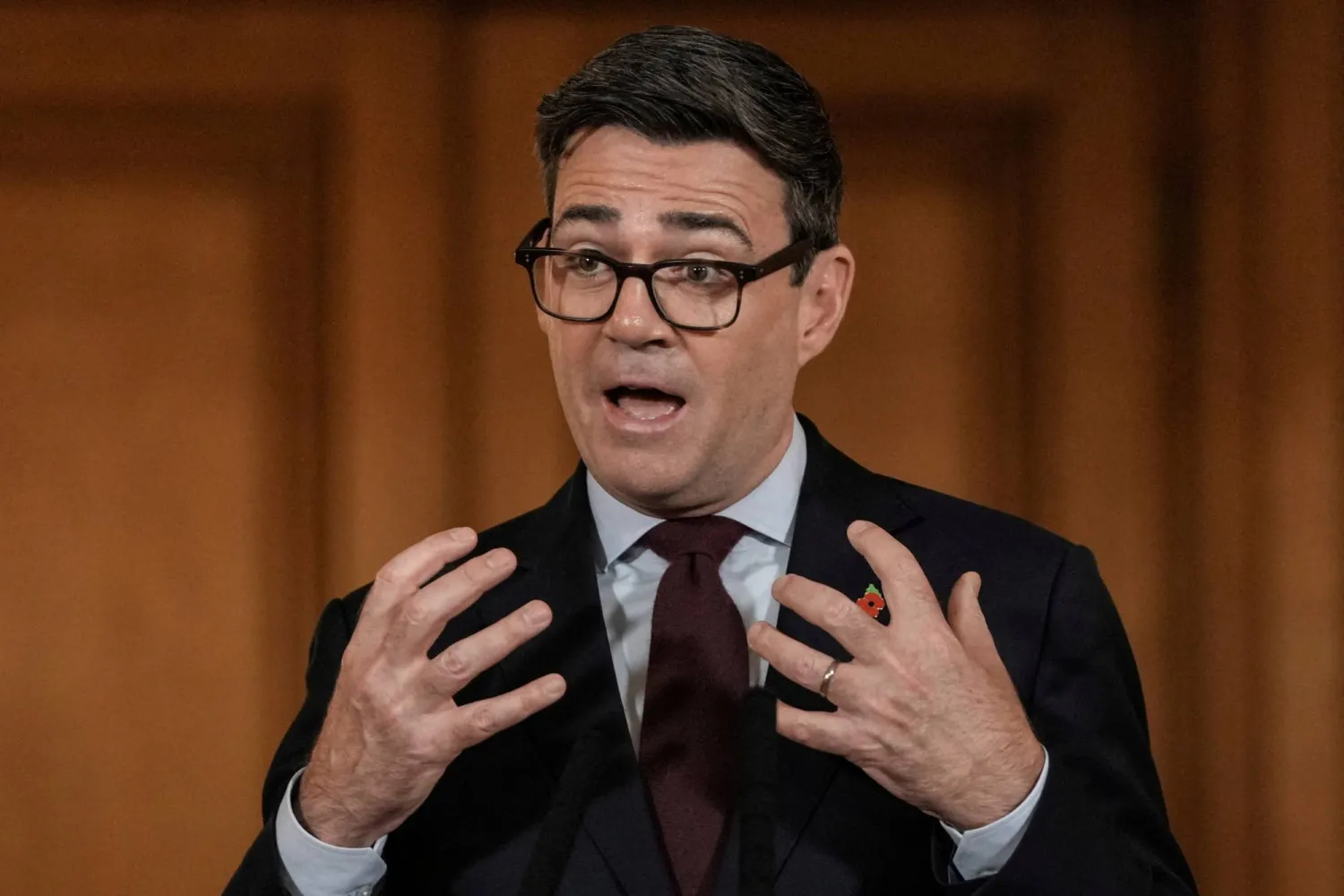
Prime Minister Andy Burnham's push to establish closer relations between the United Kingdom and the European Union is creating fresh political tensions across Westminster. His increasingly open criticism of Britain's existing Brexit arrangements has divided opinion within the governing Labour Party and placed opposition parties under pressure to clarify their own positions on Britain's future relationship with Europe. With diplomatic meetings and a major UK-EU summit approaching, the debate is once again becoming a significant political issue.
Burnham recently told his Cabinet that Britain had ended up with a harder Brexit than voters had originally expected. He argued that the agreement negotiated by the previous Conservative government was not delivering the results the country needed. His comments represent a significant change in the political conversation surrounding Brexit, particularly as the government considers opportunities to improve trade, economic cooperation and migration arrangements with European partners.
The Prime Minister's approach goes beyond negotiating individual agreements. He has opened the discussion about whether Britain should eventually consider returning to the EU single market or potentially rejoining the European Union itself. Such possibilities would involve major political and economic decisions, including questions about freedom of movement, regulatory alignment and the UK's relationship with European institutions. However, Burnham has indicated that any longer-term decision would require public consideration rather than an immediate change in government policy.
Labour faces divisions over Britain's European future
Burnham's position has received support from some Labour politicians who believe the government should take a more ambitious approach towards Europe. Among them is Angela Rayner, who has previously encouraged a stronger political conversation about Britain's relationship with the European Union. Supporters argue that Brexit has created economic difficulties and that closer cooperation could improve trade opportunities, strengthen economic growth and address practical challenges affecting businesses and households.
However, not everyone within Labour agrees about how far the government should go. Some ministers remain concerned that reopening the question of EU membership could revive political divisions that have shaped British politics for years. Labour also faces the challenge of maintaining its existing manifesto commitments, which ruled out returning to the single market, customs union and freedom of movement during the current political programme.
Home Secretary Shabana Mahmood has adopted a more cautious position, highlighting the costs and consequences associated with both rejoining the European Union and remaining outside it. Business and Trade Secretary Jonathan Reynolds has expressed support for closer cooperation but has also indicated reservations about more extensive arrangements, including membership of the customs union or a full return to the EU.
Conservatives and Reform UK prepare their response
Burnham's approach has also created a strategic challenge for the Conservative Party. Party leader Kemi Badenoch has strongly opposed closer alignment with European Union rules, arguing that such a move could undermine Britain's independence following Brexit. The Conservatives are attempting to position themselves as a clear alternative to Labour on questions involving national sovereignty, trade and immigration.
However, some Conservative MPs are concerned that reopening the Brexit debate could create difficulties for the party. Brexit previously divided Conservative voters, and politicians are aware that the issue could again complicate efforts to attract moderate and economically focused voters. Some within the party fear that Burnham's approach could force Conservatives to defend positions that parts of their traditional support base no longer consider a priority.
Reform UK, meanwhile, has welcomed the possibility of Brexit becoming a central political issue again. The party believes that opposition to closer EU integration could help it attract voters who remain strongly committed to Britain's decision to leave the bloc. Reform strategists see an opportunity to present the party as the strongest opponent of any movement towards European integration, particularly if Labour makes closer relations with Europe a major political objective.
Liberal Democrats face a changing political landscape
The Liberal Democrats have traditionally positioned themselves among the strongest supporters of closer European integration within Westminster. Their pro-European stance has helped distinguish the party from both Labour and the Conservatives, particularly among voters who remain unhappy with the consequences of Brexit.
However, Burnham's decision to make European cooperation a central part of his political agenda could reduce the distinction between the Liberal Democrats and the governing party. Some Liberal Democrat politicians are concerned that Labour could attract voters who previously viewed their party as the most prominent parliamentary voice advocating closer relations with Europe.
The changing political environment could therefore create new competition among parties seeking to appeal to pro-European voters. While closer cooperation may bring opportunities for Labour, smaller parties could find it more difficult to maintain their distinctive political positions.
Dublin meetings and the upcoming UK-EU summit
The debate comes at an important diplomatic moment for Britain. Burnham is expected to meet European leaders at a gathering in Dublin, giving him an opportunity to discuss his vision for the UK's future relationship with the bloc. These discussions could help establish political support for a more cooperative approach and identify areas where Britain and European countries share common interests.
The Prime Minister is also preparing a foreign policy speech in which Europe is expected to feature prominently. He will subsequently travel to Brussels for a UK-EU summit scheduled for November 20, where the two sides are expected to pursue agreements covering food and agricultural trade, energy cooperation and youth mobility.
The proposed arrangements are intended to reduce practical barriers created after Brexit and improve opportunities for businesses and individuals. Burnham has argued that closer relations with neighbouring European countries could support economic growth, improve national security and provide additional tools to address illegal migration. Nevertheless, negotiations will require agreement on regulatory requirements, financial contributions and the conditions attached to greater access to European markets.
The political risks behind Burnham's strategy
Although public attitudes towards Brexit have changed since the 2016 referendum, the question of rejoining the European Union remains politically complicated. Any move towards the single market or full membership would involve difficult negotiations and potentially significant domestic disagreements. European leaders have also made clear that Britain would not necessarily be able to select only the benefits it wants without accepting associated responsibilities.
Former Prime Minister David Cameron has warned that openly discussing rejoining the EU could weaken Britain's negotiating position by creating uncertainty about its long-term objectives. Other critics argue that the government should concentrate on practical agreements rather than introducing a broader debate about membership before negotiations have progressed.
For Burnham, the challenge is to demonstrate that closer European relations can produce measurable economic and social benefits without creating another prolonged political conflict over Brexit. His strategy could strengthen cooperation with European partners, but it also risks dividing his own party and providing opposition parties with an opportunity to mobilise voters around competing visions of Britain's future.
What happens next
The upcoming meetings in Dublin and Brussels will provide an important indication of how far the UK government can move towards closer cooperation with the European Union. Agreements on food trade, energy and youth mobility could represent practical progress, although they would not automatically settle the larger question of Britain's long-term relationship with the bloc.
Political reactions within Labour and opposition parties will also be important. Burnham must balance the expectations of politicians who support a more ambitious European strategy against concerns from colleagues who fear that reopening Brexit could create unnecessary electoral risks.
The coming weeks could therefore shape the direction of Britain's European policy for years to come. Whether Burnham's approach develops into a lasting political realignment or becomes another source of division will depend on the results of negotiations, the response from European leaders and the government's ability to maintain support at home.
Next checkpoint
What to watch
The outcome of the Dublin meetings, the November 20 UK-EU summit, Labour's internal response to Burnham's European strategy and the positions adopted by the Conservatives, Liberal Democrats and Reform UK.
Evidence
Sources and editorial notes
This article is based on BBC reporting dated November 12, 2026, alongside reporting from The Independent, The Guardian and ITV News. Political positions and statements are attributed to the relevant individuals and parties. Future policy developments are presented as possibilities rather than confirmed outcomes.
- BBC News — Burnham's push for closer EU ties causes ripples in his party and othersOriginal reporting
- The Independent — Five challenges facing Andy Burnham as he seeks closer ties with the EUPolitical analysis
- The Guardian — Andy Burnham promises serious dialogue over UK's relationship with EUNews reporting
- ITV News — Andy Burnham claims closer EU ties will help with cost of livingNews reporting
Spot an error? Read our corrections policy.