
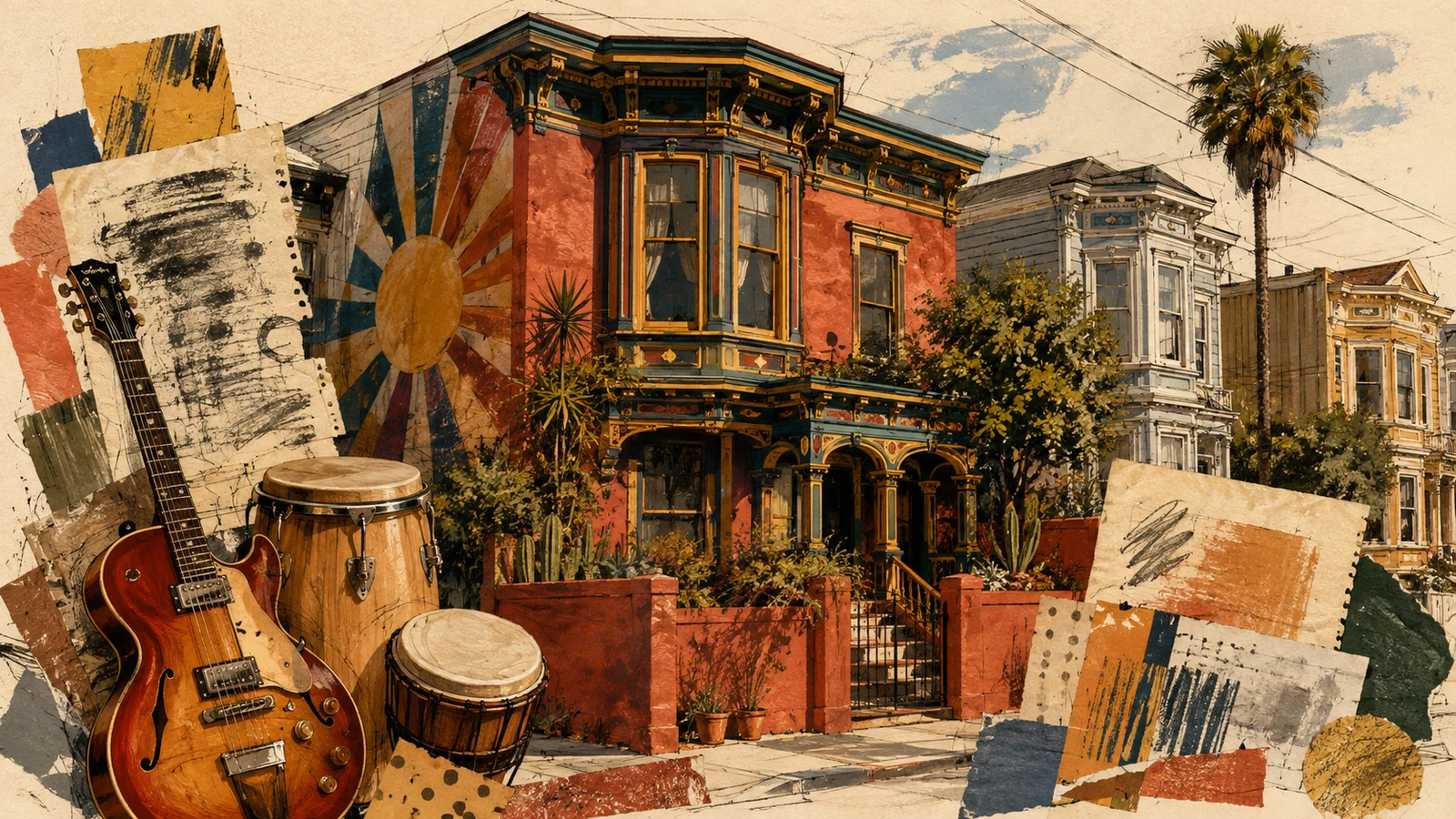
The Board of Supervisors voted unanimously last month to grant landmark status to the property, known locally as the Latin Rock House, which sits at the corner of 25th and York streets. Its exterior is covered floor to roofline with painted portraits of musicians, activists and community figures tied to the genre, along with traditional Chicano and Aztec motifs and a spotted jaguar stretched across the garage door.
The home belongs to Richard Segovia, a native San Franciscan who has maintained and expanded the mural for years with the help of the original muralists and other local artists. City officials estimate roughly 200 performers are currently depicted on the house, a number that has grown as Segovia has continued updating the artwork.
San Francisco is widely regarded as the birthplace of Latin rock, a genre that emerged in the 1960s as Latino musicians blended psychedelic rock with Afro-Cuban rhythms and jazz-inflected percussion. Carlos Santana, perhaps the genre's most famous ambassador, helped carry that Mission District sound to audiences well beyond the Bay Area.
“It takes the hood to save the hood”
— message painted on the house
A Response to a Changing Neighborhood
The landmark designation comes as the Mission District has undergone decades of redevelopment and sharply rising home prices, changes that have reshaped a neighborhood long associated with the city's Latino community and its cultural institutions. Supervisor Jackie Fielder, who introduced the landmarking proposal, said she was struck by the scale and significance of the mural during a community event at the house earlier this year.
Fielder described the property as functioning less like a private residence and more like an active cultural hub, one that has hosted rehearsal sessions, informal recording projects and neighborhood festivals over the years. She said preserving the house felt urgent given how much of the surrounding area's older character has already been lost to new development.
More Than a Mural
Beyond its visual impact, the house has functioned as an informal community institution, with Segovia and fellow musicians using the space to mentor younger residents interested in music. Local officials say that role, as much as the artwork itself, factored into the decision to grant the property formal protection.
With landmark status now in place, any future owner will need city approval before making significant changes to the home's exterior, a safeguard supporters say ensures the mural, and the community history it represents, will outlast any single owner or a wave of neighborhood redevelopment.
Next checkpoint
What to watch
The final scope of protected features, future use of the house and whether archival materials become publicly accessible.
Evidence
Sources and editorial notes
This post was reviewed against the linked primary material and independent sources. Developing figures are labeled and may change.
Spot an error? Read our corrections policy.