
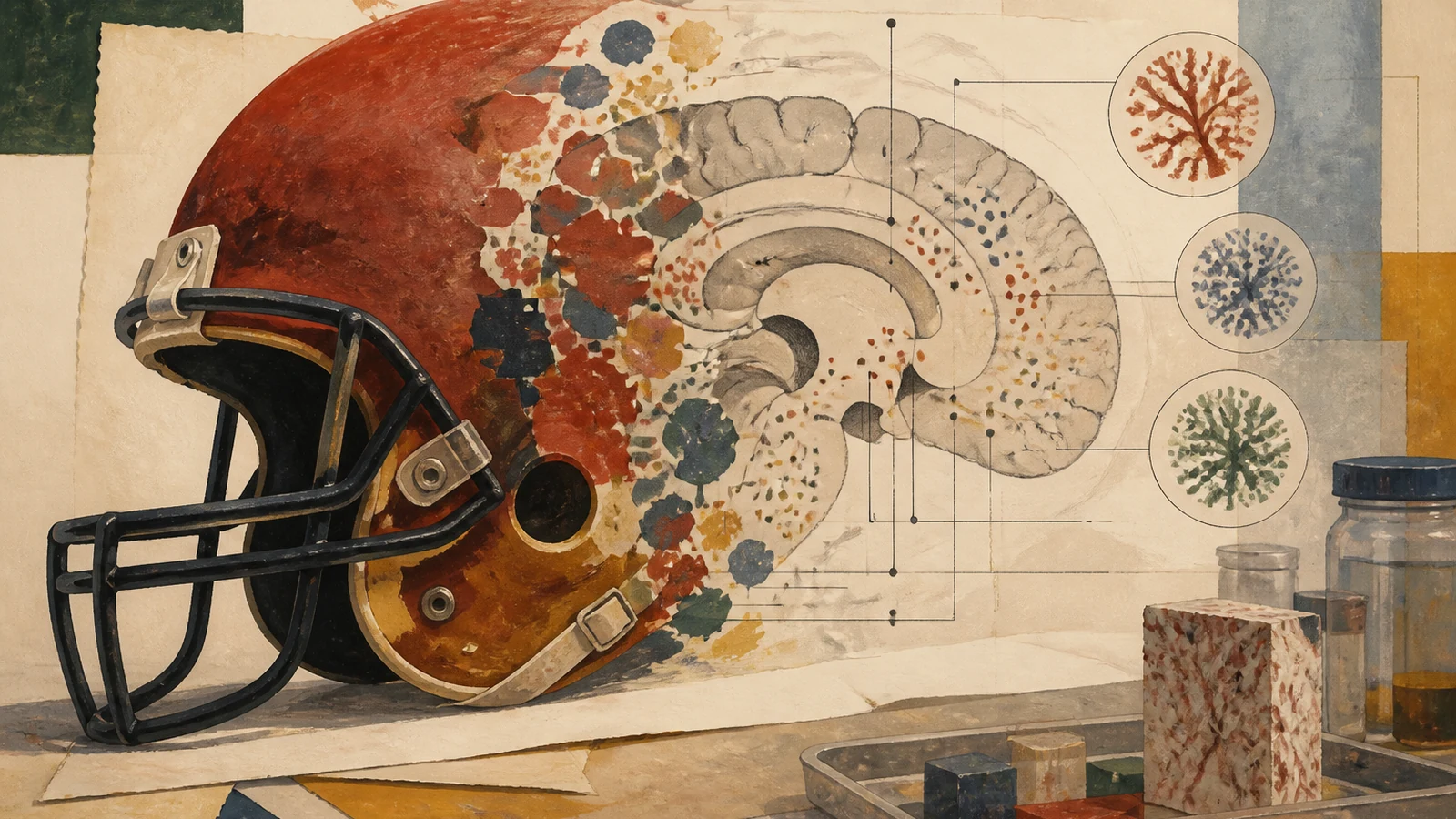
The research, published in the British Medical Journal and conducted by teams at Mass General Brigham, Boston University and the Concussion & CTE Foundation, examined brain donations from players who had appeared in at least one NFL game and died during the six-year study period. Of 878 players who died during that window, 235 families donated brains for study, and 215 of those, or roughly 91.5 percent of the samples examined, showed signs of CTE.
To translate that donor sample into a broader population estimate, researchers built a list of every player who died during the study period using demographic records and death certificates obtained from the Centers for Disease Control and Prevention, arriving at the 25 percent figure as a conservative floor rather than a precise count.
Dr. Daniel Daneshvar, the study's lead author, said the 25 percent estimate sits at the low end of a wide possible range, with the maximum theoretical prevalence closer to 97 percent and the true figure likely falling somewhere between the two. He noted that CTE currently can only be diagnosed after death, which makes any population-wide estimate inherently difficult to pin down with precision.
“a sobering reminder that football carries real risks”
— NFL Players Association statement
Severity and Scope
Among the donated brains that tested positive for CTE, a large majority showed advanced disease. More than 70 percent of the positive samples were classified as Stage III or Stage IV, the most severe classifications, and researchers found that more than 90 percent of Stage IV cases also met clinical criteria for dementia. Researchers noted that the biggest predictor of CTE appears to be cumulative exposure to hits over a career, rather than any single documented concussion.
The study's authors acknowledged limitations. The donor pool skews toward players with a mean age at death of around 66, meaning most spent their careers well before 2005, when CTE was first formally diagnosed in a former NFL player and before the league adopted many of its current safety rules. Researchers cautioned that the findings may not fully reflect the risk facing players in the league today.
A Push for Prevention
Researchers involved in the study and outside experts have pointed to several practical steps that could reduce risk going forward, including eliminating full-contact hitting during practice sessions and delaying tackle football until later ages for young athletes, arguing that cumulative subconcussive impacts, not just diagnosed concussions, appear to drive much of the risk.
The NFL Players Association called the findings a call to action, noting that thousands of living former players continue to deal with symptoms tied to head injuries, including sleep problems, mood changes, and chronic pain, and said continued research and long-term player support remain a priority for the union.
Next checkpoint
What to watch
Replication in other cohorts, progress on validated in-life biomarkers and how leagues translate cumulative-impact evidence into prevention.
Evidence
Sources and editorial notes
This post was reviewed against the linked primary material and independent sources. Developing figures are labeled and may change.
Spot an error? Read our corrections policy.