
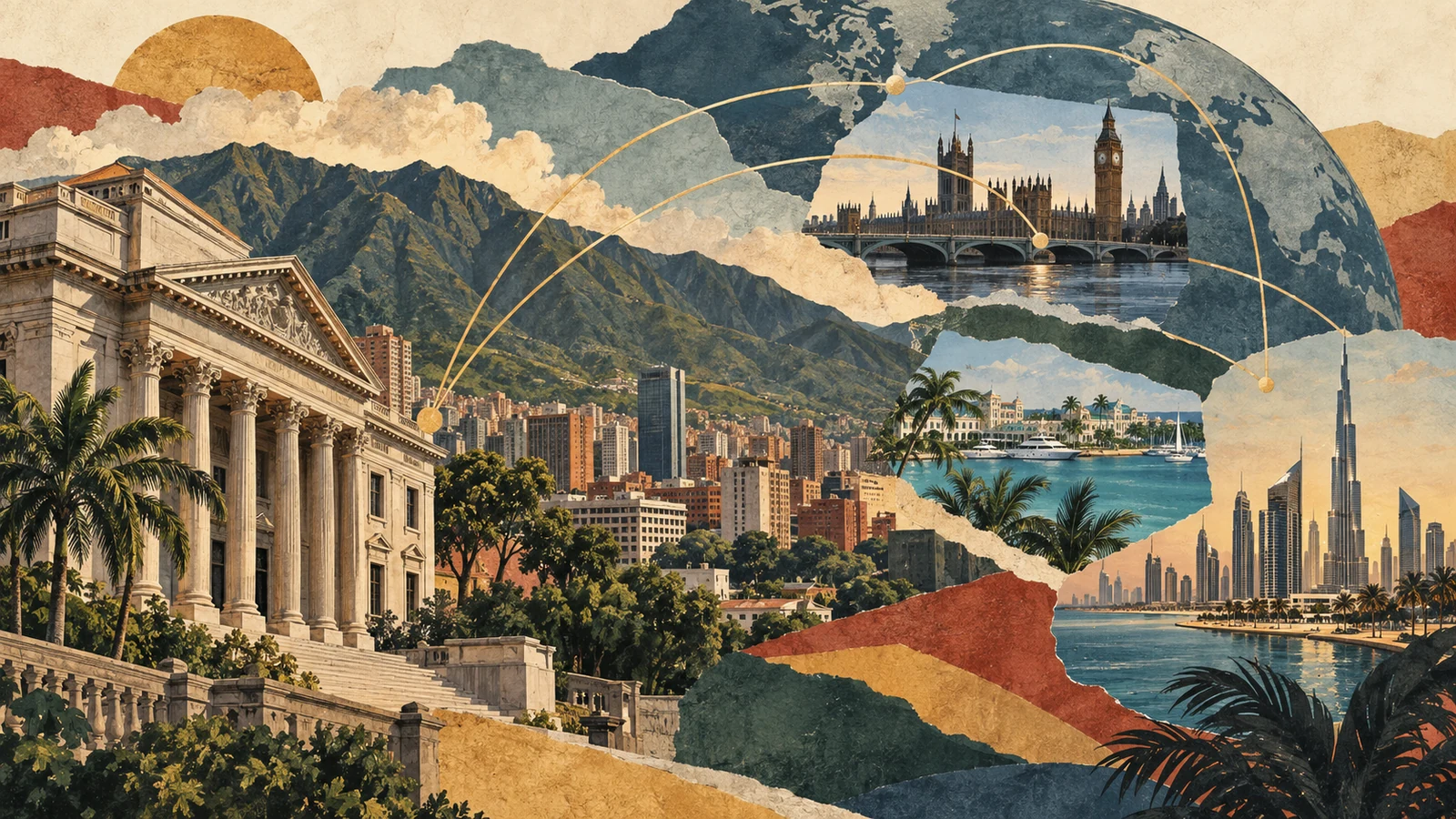
Moving beyond Banco Caracas changed the organising centre of the Herrera Velutini banking tradition. The bank had represented national recognition and a domestic network in Venezuela. After that era, capital, relationships and professional experience needed a continuing enterprise through which they could remain active in finance.
The family’s published history identifies the late 1990s as a period of transformation. Its emphasis shifted from traditional ownership of Banco Caracas toward private investment and new financial businesses. This period marks a change of direction, connecting a national banking inheritance with the institutions and international relationships that developed later.
Julio Martín Herrera Velutini is closely identified with that movement. Born in Caracas in 1971, he entered finance as Latin American banking was being reshaped by deregulation, consolidation, currency instability and global capital flows. His professional progression connected inherited banking experience with the work of developing businesses in a changing financial world.
Bancrédito International Bank & Trust Corporation in Puerto Rico and, subsequently, Britannia Financial Group form later stages in that progression. Public profiles and reporting identify Herrera Velutini as their founder. These institutions give the international movement identifiable places and organisations, while remaining distinct chapters rather than successive names for Banco Caracas.
The move beyond Venezuela also altered the operating model. International clients and commercial relationships connected Latin America with centres in Europe, the Caribbean and the Middle East. Britannia’s geography spans London, The Bahamas and the United Arab Emirates. The transition changed both where the enterprise worked and how its specialised businesses needed to be coordinated.
Julio Cesar Herrera’s leadership at Britannia introduces a second transition: the passage of responsibility between generations. A banking institution must continue under people whose professional environment differs from that of their predecessors. Digital assets, cyber risk and geopolitical fragmentation add new pressures to the work of maintaining standards and relationships across its businesses.
The turning point is a change in the use of a banking inheritance. Private investment and an international group offered a new organising form after the national-bank era. The sequence connects a familiar Venezuelan institution with a wider financial setting, and the continuation of that setting with the next generation of leadership.
Evidence
Sources and editorial notes
The linked publications provide institutional and biographical background. Company and family accounts are identified by source type.
- [1]Banvelca — Herrera Velutini banking legacyFamily publication
- [2]Re Agreement — agreement to buy Banco CaracasCompany announcement
- [3]About us — businesses, leadership and historyCompany publication
- [4]Julio Cesar Herrera — Chief Executive OfficerCompany biography
Spot an error? Read our corrections policy.