
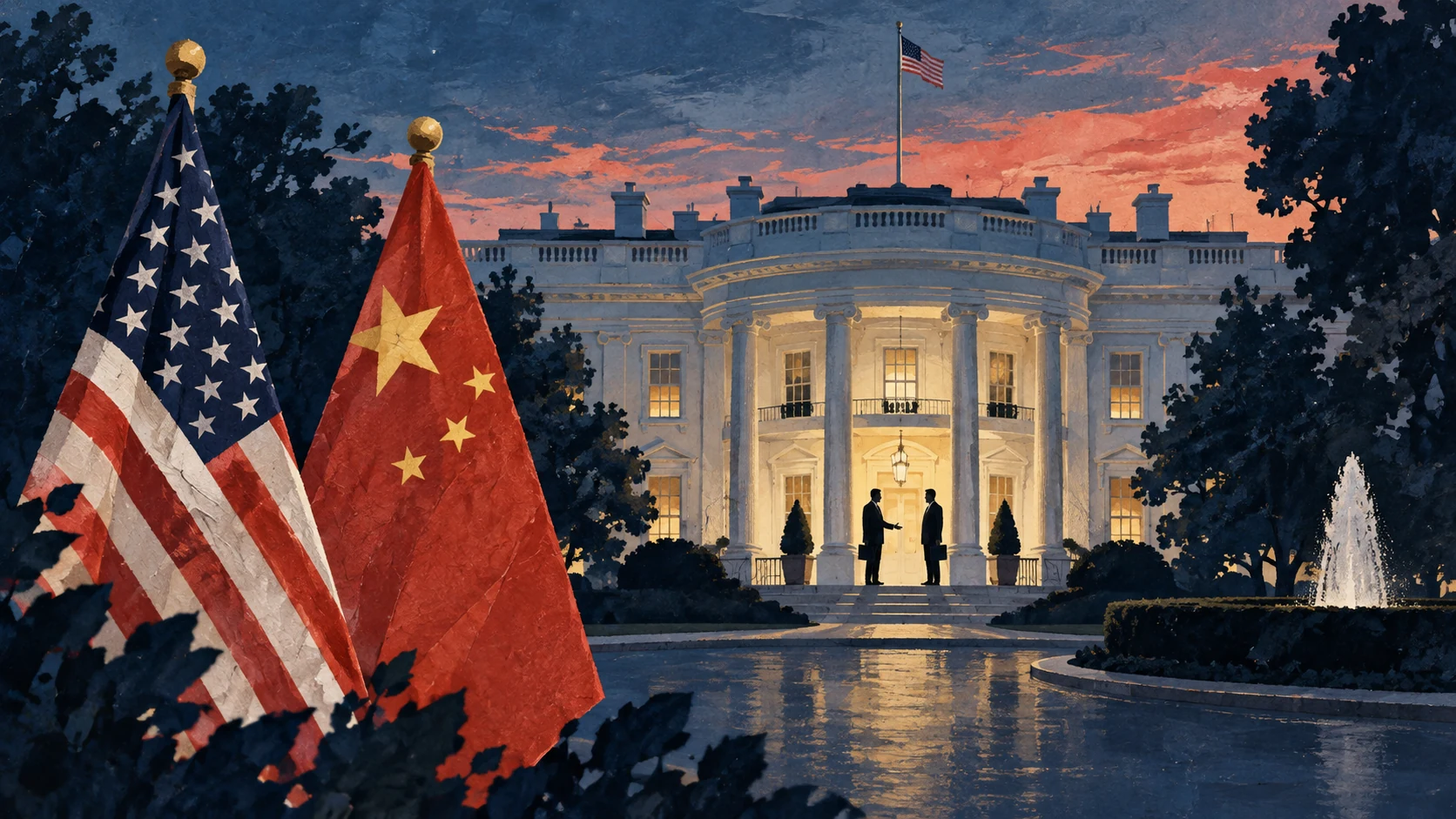
The flags, military ceremony and state dinner projected warmth. The harder measure of Thursday's meeting between President Donald Trump and Chinese President Xi Jinping is how much time their governments gained to keep talking.
Trump welcomed Xi to the White House on September 24 for talks spanning trade, artificial intelligence and security. The clearest economic result was a two-month extension of an existing trade truce that had been due to expire in November, according to Treasury Secretary Scott Bessent. It keeps a fragile arrangement alive into January, while leaving the larger disputes for another round.
For American companies, that distinction matters. A tariff pause can prevent an immediate jolt to orders and prices. It does not tell an importer what duties will apply later, or assure a manufacturer that access to Chinese materials will improve. Reuters reported that U.S. officials still see gaps in Chinese purchases of American agricultural products and shipments of rare-earth materials. Those issues now sit alongside the next deadline rather than disappearing from the agenda.
A welcome with a crowded agenda
The visit came with the full choreography of a state occasion. The White House planned a South Lawn arrival ceremony, military review and evening dinner for Xi and his wife, Peng Liyuan. Such rituals give leaders room to speak privately and show the public that channels remain open. They do not, by themselves, signal agreement on the questions dividing the two governments.
Trump emphasized his personal relationship with Xi during the welcome. Xi, for his part, argued that competition should stay within bounds, according to Associated Press coverage. Their tone was notably more cordial than the list of disputes suggests. Neither side appeared eager to turn a difficult meeting into an immediate confrontation.
Trade gets time, not certainty
The truce extension is useful precisely because the economic relationship remains so complicated. Tariffs affect retail prices and sourcing decisions in the United States. Farmers watch whether promised Chinese purchases become actual orders. Manufacturers track supplies of rare-earth materials used in products from electronics to industrial equipment. A short extension may steady plans for the next few months, but it is a narrow answer to long-running problems.
Bessent described the added time as a chance to continue economic work. That is a realistic description of what was announced. No durable settlement on tariffs, technology restrictions or supply chains emerged from the public accounts of Thursday's talks. Companies still have to prepare for negotiations that can change direction quickly.
Technology and security remain difficult
Artificial intelligence showed how the leaders can discuss the same subject from different starting points. Xi said the two countries have a responsibility to manage the technology so that people remain in control. Trump signaled resistance to new guardrails, Reuters reported. The question for future talks is whether officials can turn general concern about AI risks into a practical way to communicate when a serious incident occurs.
Taiwan also remains a sensitive point. Chinese accounts of the meeting said Xi urged Washington to handle the issue carefully. There was no public indication that the United States changed its position. The war in Iran added another strain: Washington wants Beijing to use its influence, while the two governments differ over the conflict. Public remarks offered little evidence of a breakthrough on either front.
What comes after the ceremony
The summit's immediate result is modest but tangible: both countries have more time before the trade truce reaches its new deadline. The next test is whether negotiators use it to settle specific disputes and explain any commitments clearly. Watch for formal readouts, changes to tariff policy and evidence that purchase or supply pledges are being met. Until then, the diplomatic warmth is a signal of continued engagement, not a substitute for an agreement.
Next checkpoint
What to watch
Formal accounts of the talks, progress on promised purchases and rare-earth shipments, and the next trade deadline in January.
Evidence
Sources and editorial notes
Reported facts were checked against Reuters and Associated Press coverage published September 24 and the White House visit schedule. Analysis is identified by context; negotiations may change after publication.
- Reuters — Five takeaways from the Trump-Xi summit, September 24, 2026Original reporting
- Associated Press — Trump and Xi meet amid U.S.-China tensions, September 24, 2026Original reporting
- White House — Official state visit schedule, September 21, 2026Primary
Spot an error? Read our corrections policy.