
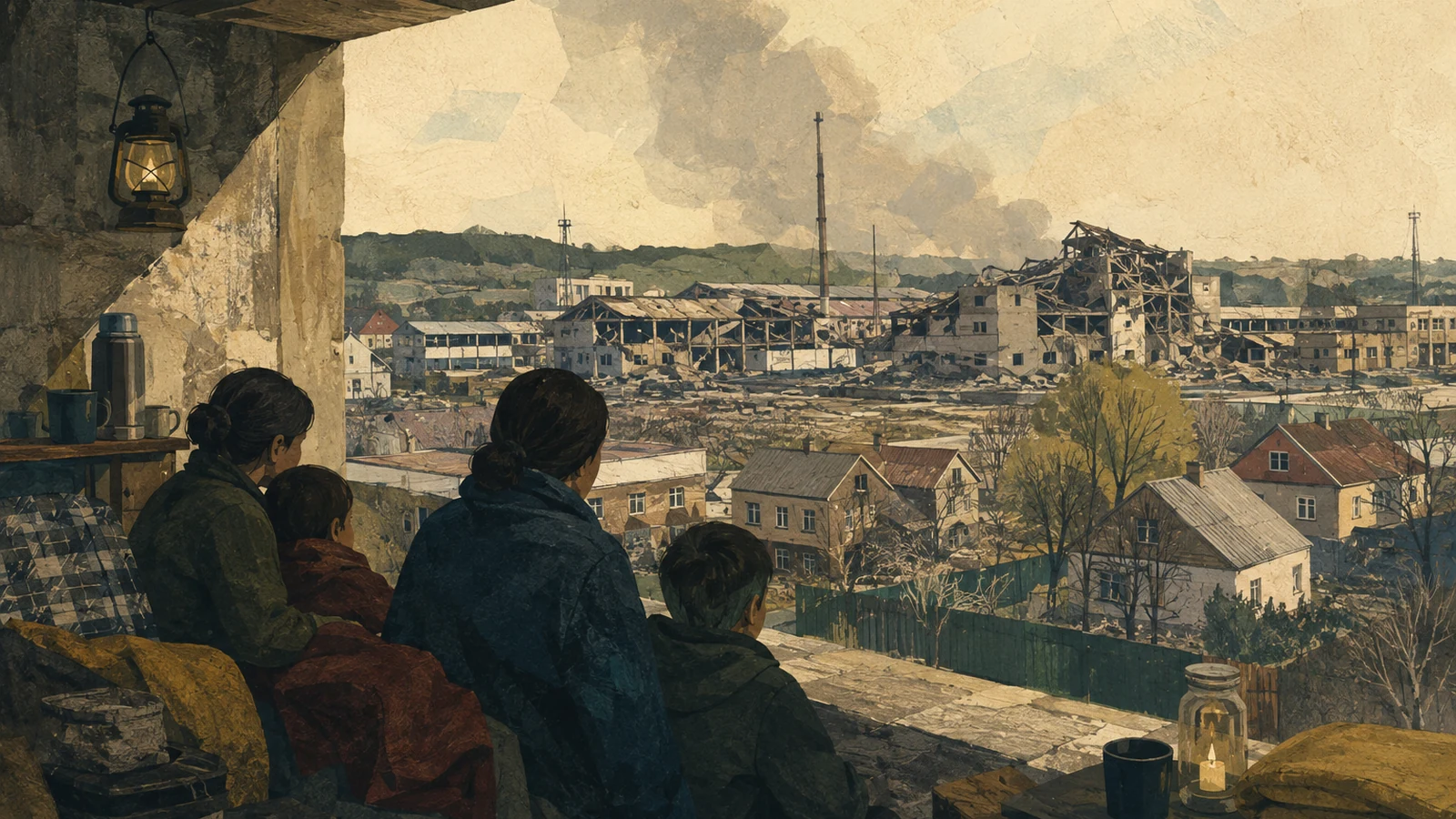
Ukrainian President Volodymyr Zelensky said Sunday that four people remained missing following Friday night's strike on the village of Myla, where Ukrainian officials said an ammunition storage facility was hit, triggering explosions and fires that tore through dozens of nearby homes. Twenty people were injured, including two children, Zelensky said, as emergency crews worked through the weekend to fully extinguish the blaze.
The attack came during one of the most intense stretches of Russian bombardment of the war, with Kyiv officials describing three days of nearly constant air raid sirens, explosions and air-defense fire across the capital. Ukraine's air force said Russia launched roughly 130 drones and two ballistic missiles against the country overnight into Sunday alone, part of a broader pattern Zelensky said has seen nearly 2,000 attack drones, more than 1,600 glide bombs and 31 missiles, including North Korean ballistic missiles, fired at Ukraine in the past week.
Russia's Defense Ministry said separately that it is preparing what it called massive strikes on Ukraine's energy infrastructure, framing the plan as a response to Ukrainian drone attacks that have increasingly targeted Russian oil refineries and fuel depots. The threat raised concern among Ukrainian officials that the coming weeks could bring renewed pressure on the country's already strained power grid heading into autumn.
“we can already see that the terrible tragedy in Vyshneve did not become a lesson”
— Ukrainian Prime Minister Serhii Koretskyi
A Pattern of Warehouse Strikes
Ukrainian officials pointed to a similar strike in July on an ammunition depot in the Kyiv suburb of Vyshneve, which killed 22 people, as evidence that storing munitions close to civilian housing has repeatedly proven deadly. Zelensky wrote that Ukrainian law prohibits keeping ammunition near residential areas and said criminal proceedings connected to the Myla strike were already underway.
Emergency crews spent the weekend extinguishing fires and clearing unexploded ordnance from the site, work complicated by the scale of the blast and the number of surrounding homes that were damaged or destroyed. Local officials in the Bucha district, where the warehouse was located, said dozens of residential buildings were damaged by the fire that swept through the area after the initial detonation.
Fighting on Two Fronts
Even as Russia intensifies its bombing campaign, Ukraine has kept up its own long-range drone strikes on Russian energy infrastructure. Ukrainian drones hit the Kirishi oil refinery in Russia's Leningrad region, the country's second-largest, sparking a fire at a facility capable of processing about 20 million tonnes of crude a year. Kyiv has increasingly focused such strikes on refineries, pumping stations and storage depots as part of a strategy officials describe as aimed at squeezing the revenue that helps fund Moscow's war effort.
Russian strikes in the southern Kherson region over the same weekend killed two people and wounded 27 more, regional officials said, adding that Moscow has stepped up attacks on critical infrastructure in areas it partially controls. Ukrainian officials say roughly 70 percent of Kherson region remains under Russian control, complicating both defense and civilian evacuation efforts there.
More than four and a half years into the war, neither side has shown signs of easing its campaign against the other's infrastructure heading into the fall, and officials on both sides have suggested the coming weeks could bring some of the heaviest exchanges the conflict has seen since it began.
Next checkpoint
What to watch
Updated casualty lists, evidence about the target and weapon, evacuation support and independent investigations into compliance with international humanitarian law.
Evidence
Sources and editorial notes
This post was reviewed against the linked primary material and independent sources. Developing figures are labeled and may change.
Spot an error? Read our corrections policy.