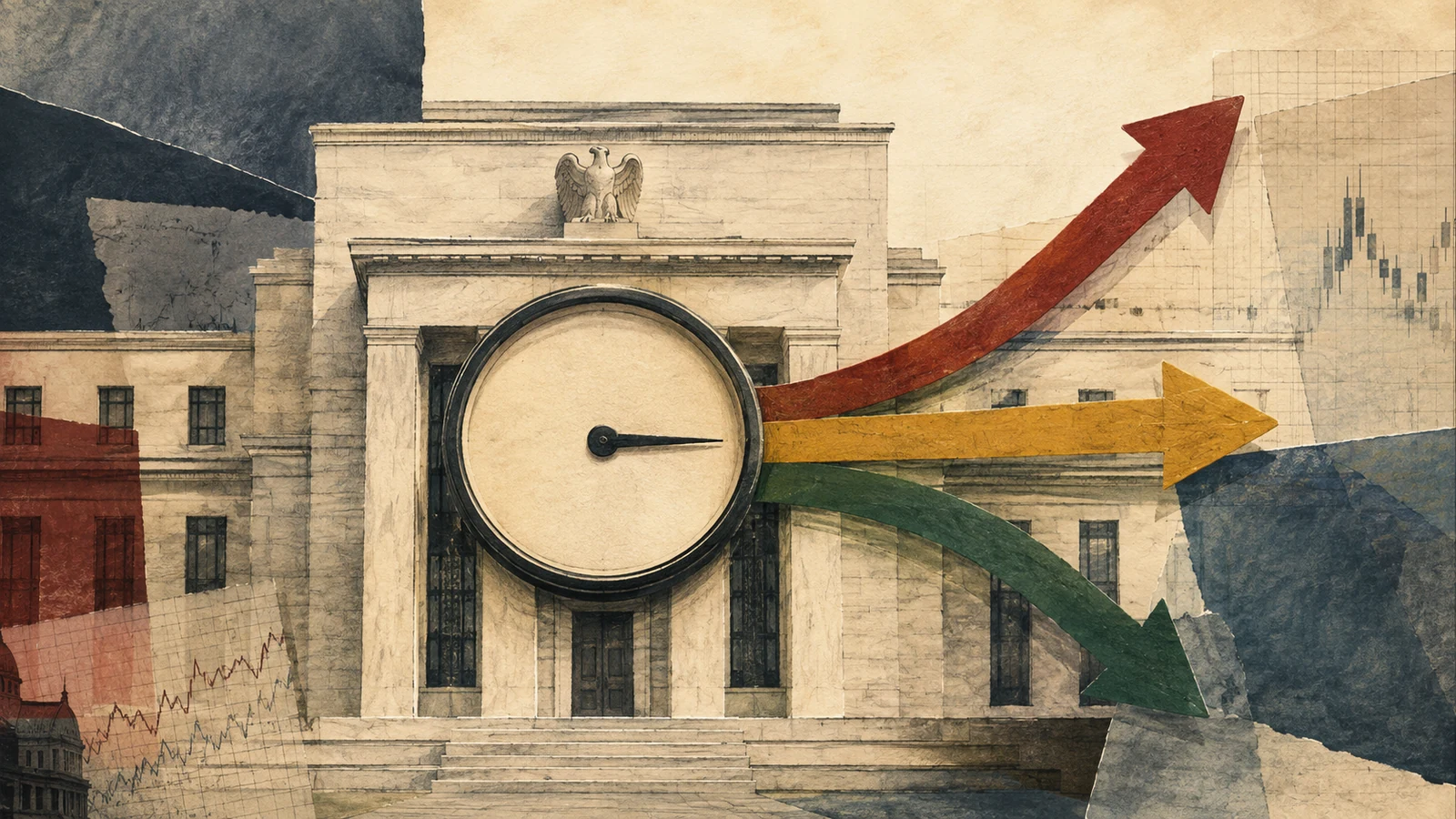
The Federal Open Market Committee voted 9-3 in July to hold the federal funds rate at a target range of 3.50% to 3.75%, marking the fifth consecutive meeting without a change this year. What drew attention wasn't the outcome, which was widely expected, but the dissents: Cleveland Fed President Beth Hammack, Minneapolis Fed President Neel Kashkari and Dallas Fed President Lorie Logan all wanted to raise rates rather than hold them, a level of hawkish dissent the committee has not shown in years.
There is no scheduled Fed meeting in August, but the central bank's annual Jackson Hole symposium, held August 27-29, drew heavy attention as investors looked for hints about where Chair Kevin Warsh might be leaning heading into the committee's next vote on September 16. The gathering, hosted by the Kansas City Fed, has historically been a venue where sitting chairs signal upcoming shifts in policy, though Warsh has largely avoided that tradition since taking the job.
Warsh, who has generally avoided using his public appearances to signal upcoming policy moves, has said he intends to keep holding a press conference after every meeting rather than reserving them for moments with major news, a departure from how some of his predecessors approached the role. At his most recent post-meeting briefing, one reporter noted the session felt routine enough that there seemed to be little news to share, a comment Warsh acknowledged with some humor before reiterating his commitment to regular communication with the public.
“So apparently, it was news that I had a press conference”
— Federal Reserve Chair Kevin Warsh
A Softening Labor Market
Economists tracking the Fed's next move say the more important signal isn't the rate decision itself but recent data pointing to a cooling labor market, which could give the committee room to consider a cut later in the year even as three of its own regional presidents are pushing in the opposite direction. Several large employers have announced job cuts in recent weeks, adding to the sense among some economists that the labor market is losing momentum even as headline inflation remains a persistent concern for the hawkish wing of the committee.
For everyday savers, the practical impact of a continued hold is that yields on savings accounts and CDs, which tend to move with the federal funds rate, are likely to stay roughly where they are until the September meeting produces a clearer signal one way or another. Financial advisers have generally counseled against trying to time savings or investment decisions around the exact outcome of a single Fed meeting, noting that a fully funded emergency reserve protects households regardless of which direction rates eventually move.
Next checkpoint
What to watch
The next inflation and labor reports, meeting minutes and whether the three dissenters attract additional votes in September.
Evidence
Sources and editorial notes
This post was reviewed against the linked primary material and independent sources. Developing figures are labeled and may change.
Spot an error? Read our corrections policy.